
Ransomware & Remote Access
Why the decisive moment is an access decision, not a ransom note.
Ransomware starts before encryption
Ransomware is usually noticed when systems lock up, data disappears, or a ransom demand arrives. By that point, the attacker has already crossed the threshold that mattered most: initial access. In real support environments, that access can start with a password reset, an MFA recovery, a remote support session, or a vendor request handled through a ticket or chat. Ransomware does not always start with malware. Sometimes it starts with a request that sounds normal enough to approve.
CISA has documented that Scattered Spider actors have used social engineering to convince IT help desk personnel to reset passwords and MFA tokens. Reuters reported that Clorox's lawsuit against Cognizant alleged that attackers gained access by calling the service desk and requesting employee credentials, leading to a ransomware event valued at roughly $380 million in damages. The pattern is consistent: the attacker enters through a human workflow, not a software vulnerability.
Remote access is a proven ransomware entry point
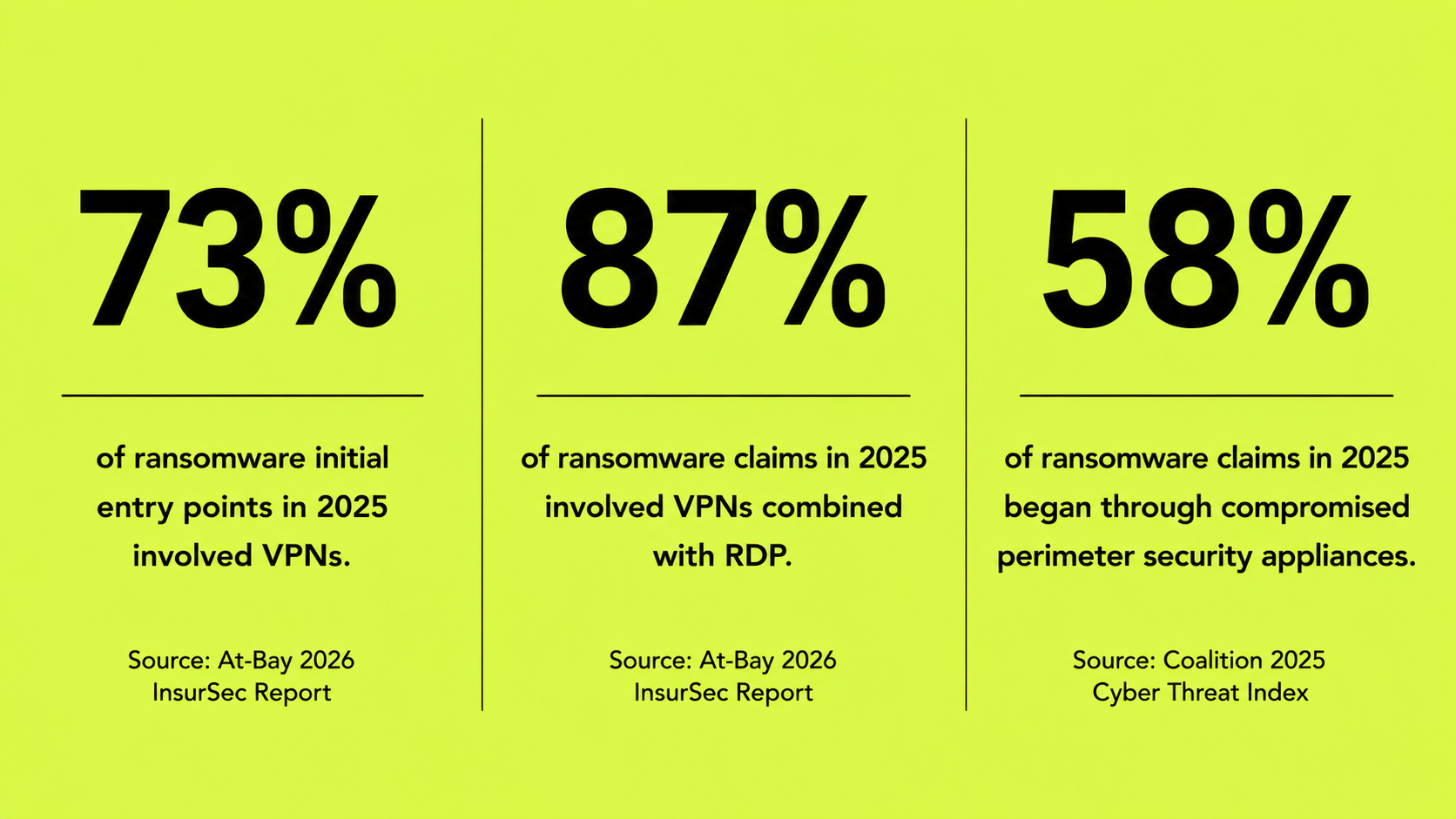
Insurance claims data makes the scale difficult to dismiss. At-Bay's 2026 InsurSec Report found that VPNs accounted for 73% of ransomware initial entry points in 2025, and VPNs, combined with RDP, accounted for 87% of all ransomware claims. Coalition's 2025 Cyber Threat Index reported a similar picture, with 58% of ransomware claims beginning through compromised perimeter security appliances.
Traceless does not harden VPN appliances or patch remote desktop services. The relevant problem is that remote access still depends on identity, approval, and trust. Those decisions happen inside help desk tickets, chat threads, and support calls, which is where Traceless operates.
Why remote access becomes an identity problem
Remote employees, administrators, MSP technicians, and vendors all legitimately need off-network access. Attackers target those same paths because a valid session appears to be a routine business activity. The attacker may not appear as malware at first. They may appear as a real account, a reset request, a caller claiming to be locked out, or a ticket that reads like any other.
CISA and Okta have both documented attackers impersonating employees and using help desk workflows to request credential resets and MFA changes. Once the wrong person is treated as the right person, they can move laterally and create conditions for extortion or encryption. The ransomware risk begins at that moment of misplaced trust.
The access-extension problem
Every organization has workflows that create, restore, expand, or re-approve access. Password resets, MFA recovery, device enrollment, privileged access changes, and credential sharing all fall into this category. These moments are inherently high-risk because they happen under pressure. The user is locked out. The executive needs access now. The vendor says the outage is urgent. The help desk wants to close the ticket.
Attackers exploit that pressure by pushing teams toward informal verification: familiar email context, internal details, caller confidence, or urgency that discourages scrutiny. Traceless addresses this by embedding identity verification directly into the workflow tools where these decisions happen. Agents can trigger MFA-based identity checks from within tickets or chats, get a verified or not-verified result before acting, and keep the audit trail in the system where the request originated. Sensitive data like passwords or recovery links can be shared through encrypted, expiring links rather than pasted into permanent ticket or chat history.
Help desks control account recovery
Help desks matter to ransomware defense because they hold the keys to account recovery. A help desk agent can reset passwords, reset MFA, enroll new devices, approve access changes, and share recovery information. That makes the help desk attractive to attackers because it can become a workaround for the very controls meant to protect the account. MFA is still necessary, but MFA reset workflows must be treated as bypass-risk workflows that require stronger verification than routine support.
The same risk extends beyond internal employees. MSPs, vendors, and external support teams regularly access client systems and sensitive data, and both sides often assume the other is legitimate. At-Bay reported that losses tied to vendor or partner ransomware attacks increased by more than 40% in 2024, with costs rising 72%. Traceless's bidirectional verification addresses this directly: the technician proves identity to the user, and the user proves identity to support, before any session or access change begins.
Secrets in tickets and chats
Access decisions live inside tickets, chat threads, and emails. Those records often contain passwords, reset links, approval notes, or sensitive access instructions. If that material stays in plain text, the risk survives long after the ticket closes. Traceless replaces persistent secrets with single-use, expiring links and logs the exchange event in the ticket record so the audit trail remains while the sensitive payload does not.
Ransomware needs access before it becomes a visible crisis. Remote access infrastructure is a documented, dominant entry point, and attackers routinely exploit the human workflows that reset, restore, or extend access. Traceless reduces that exposure by verifying identity before access is granted, elevated, or paired with sensitive information. The ransomware may begin long before encryption. The real decision point is the request that sounds legitimate enough to trust.
Prevent social engineering attacks
Start with one integration, validate quickly, and expand across your environment.